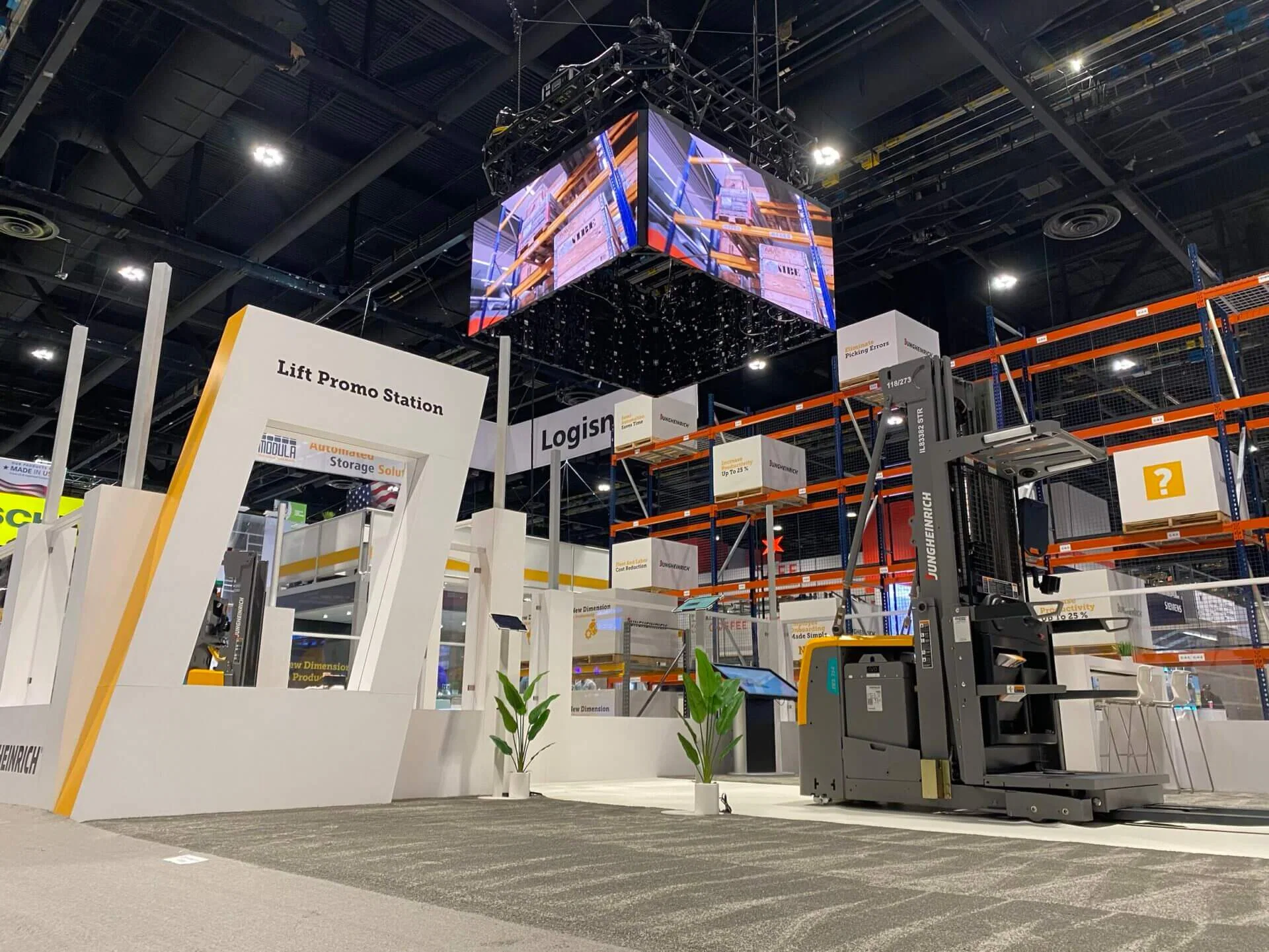
What Makes a 10x10 Work in DFW
- Single-wall graphic that stays readable from the aisle
- Counter or kiosk placed to invite, not block, foot traffic
- Lightweight modular or fabric frame for fast assembly
- Right-sized power drop ordered against the venue utility list
- Pack logic that lets one or two installers finish on schedule
- Reusable components labeled for the next DFW date
Why the 100-Square-Foot Footprint Drives Every Decision
At 10 feet by 10 feet, the booth lives or dies on restraint. There is room for one strong message, one functional counter, and a clear way for an attendee to step in. Crews that try to cram a large-booth layout into the space end up with blocked sightlines and a cramped feel that pushes traffic past instead of in. The better approach treats the back wall as the hero and keeps the floor open.
The footprint also sets the labor profile. A standard 10x10 inline at a DFW show is typically a short install for a small crew, which is exactly why sloppy freight or missing parts hurt so much. When a single crate is late, there is no second zone to work while it catches up, so the whole booth waits.
Inline Placement and Neighbor Dynamics
Inline 10x10 spaces share side walls with the booths next door, so height rules and finished-back-wall requirements matter. Most DFW venues and show organizers cap inline back-wall height and ask that anything visible to a neighbor be finished. Planning the graphic and any shelving against those limits avoids a show-floor correction during move-in.
Aisle behavior is the other half of the equation. A 10x10 at a busy hall like Dallas Market Hall competes for attention in long linear runs, so the counter and any demo screen should pull an attendee toward the open corner rather than wall them out behind a table.
- Confirm inline back-wall height limits before printing graphics
- Finish any surface a neighboring booth can see
- Angle the entry toward the open aisle corner
Utilities, Freight, and a Fast Install Window
Even a small booth needs power planned against the venue's approved utility list. At the Kay Bailey Hutchison Convention Center Dallas, exhibitors order electrical from listed providers and route technology services through the building's listed partner, so a 10x10 with a monitor and lighting should have its single drop placed before move-in rather than chased on site.
Freight for a 100-square-foot booth is usually one or two crates, which makes labeling and pack order the controlling detail. When the back wall, counter, and graphics are packed in build sequence, a small crew can open, assemble, and dress the booth inside a tight window and still have time to detail it before doors open.
10x10 Trade Show Booth Questions for Dallas Exhibitors
Q: How much space does a 10x10 booth really give me?
Roughly 100 square feet of inline space, bordered by neighboring booths on the sides and a back wall behind. After a counter and any structure, the usable open area is modest, which is why a single clear message and an open entry matter so much in DFW halls.
Q: Is a 10x10 enough for a Dallas convention-center show?
Yes, for most exhibitors it is the standard starting footprint. At venues like the Kay Bailey Hutchison Convention Center Dallas, a well-built 10x10 with a clean back wall, a counter, and good lighting competes effectively in inline runs without the freight and labor load of a larger island.
Q: How long does a 10x10 install take?
Most 10x10 inline booths are a short install for one or two technicians when parts arrive labeled and the power drop is pre-ordered. The biggest risk to that timeline is late or mislabeled freight, since a small footprint leaves no second zone to work while a crate catches up.