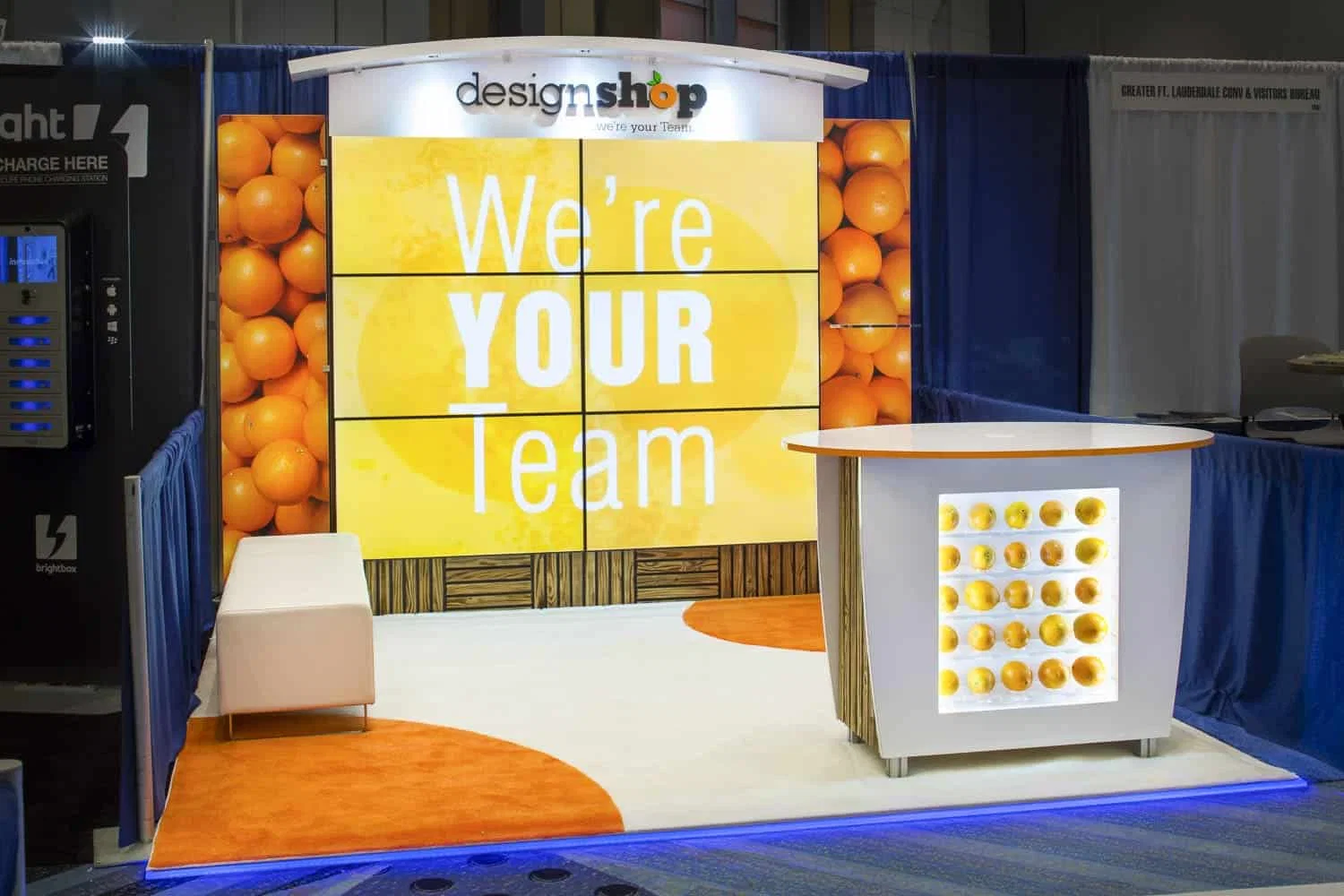
Essential Functions Handled by Trade Show General Contractors
- Securing venue permits and space assignments in advance
- Orchestrating freight handling through designated docks and staging areas
- Provisioning utilities including power, internet, and drainage connections
- Coordinating with official service partners for labor and equipment needs
- Overseeing installation schedules to meet show move-in deadlines
- Managing dismantle and material removal post-event
- Ensuring adherence to safety and compliance standards across all phases
Venue Permitting and Approval Processes
General contractors initiate the permitting sequence by submitting detailed booth plans to venue authorities well ahead of the event date, aligning with requirements outlined for the Kay Bailey Hutchison Convention Center Dallas. This step verifies that proposed structures fit within load-bearing limits and fire safety clearances, preventing on-site rejections that could cascade into timeline disruptions for multiple exhibitors sharing the floor. Contractors compile documentation on materials, dimensions, and intended configurations, cross-referencing against exhibitor guidelines to expedite approvals from facility management.
Once approved, contractors distribute confirmation details to all stakeholders, including updates on any conditional stipulations such as height restrictions or aisle adjacency rules. In the context of Dallas Market Hall events, this process also incorporates reviews for specialized flooring needs, ensuring that exhibit footprints do not interfere with shared utility trenches or emergency egress paths. The meticulous tracking of these approvals forms the foundation for subsequent logistics, allowing teams to proceed with confidence in material procurement and transport arrangements.
- Advance submission of scaled floor plans and material inventories
- Coordination with venue operations for conditional waivers if applicable
- Digital tracking of approval statuses shared via client portals
Freight Management and Dock Scheduling
Dock operations represent a critical bottleneck in trade show logistics, particularly at the Kay Bailey Hutchison Convention Center Dallas, where designated loading areas handle thousands of pounds of exhibit components daily. General contractors secure time slots through the venue's reservation system, prioritizing based on booth size and arrival sequences to optimize throughput during compressed move-in windows. This involves precise forecasting of shipment volumes, coordinating with carriers for Just in Time deliveries that align with labor availability and staging zones.
Post-dock, freight advances through marshal yards to booth locations via specialized equipment, with contractors monitoring for damage or discrepancies against manifests. For venues like the Irving Convention Center at Las Colinas, similar protocols apply, adapted to regional traffic patterns that influence unloading efficiencies. The dismantle phase mirrors this rigor, scheduling outbound freight to clear floors promptly and avoid penalties for lingering materials, all while documenting Chain of Custody for insurance purposes.
Effective management here minimizes dwell times, which directly correlates with overall event readiness and exhibitor satisfaction in high-stakes Dallas-area shows.
- Pre-event dock reservations tied to booth assignments
- Real-time shipment tracking integrated with venue systems
- Post-event freight consolidation for efficient carrier pickups
Utility Ordering and Infrastructure Setup
Utility provisioning demands exact specifications matched to booth power draws and data needs, as specified in the Kay Bailey Hutchison Convention Center Dallas exhibitor resources. General contractors calculate amperage requirements from lighting, audiovisual, and interactive displays, placing orders through official channels to guarantee reliable hookups without overload risks. This extends to water lines for product demos and compressed air for pneumatic installations, all routed through venue-approved conduits to maintain floor integrity.
Setup crews execute connections under supervision, testing circuits for voltage stability ahead of show open. In hotel-based venues like the Omni Dallas Hotel, utilities integrate with building systems, requiring contractors to navigate hybrid protocols that blend convention hall standards with guest-area sensitivities. Drain placements for wastewater management further complicate layouts, demanding pre-planned floor penetrations documented in permit filings.
Ongoing monitoring during the event addresses fluctuations, with rapid response to surges from neighboring booths, ensuring uninterrupted exhibit functionality throughout extended show durations.
Coordination with Service Partners and EACs
At the Kay Bailey Hutchison Convention Center Dallas, general contractors interface with designated service partners to unify efforts across exhibitor needs, streamlining shared services like rigging and telecommunications. This coordination prevents overlaps in resource claims, such as competing demands for overhead cranes or fiber optic runs, fostering a collaborative environment amid diverse booth requirements. Contractors facilitate introductions between exhibitor-appointed contractors and venue teams, clarifying jurisdictional boundaries to avoid conflicts during peak installation hours.
For events at the Fashion Industry Gallery, where space constraints amplify inter-booth interactions, this role emphasizes communication protocols that keep ancillary services on track without encroaching on display areas. Documentation of all partner agreements, including scope limitations and liability shifts, protects all parties through the event cycle. Post-show debriefs refine these partnerships for recurring clients, building efficiency into future engagements.
This integrative function elevates the overall production quality, turning potential friction points into synchronized operations.
- Joint planning sessions with EACs and venue partners
- Shared resource calendars to prevent scheduling clashes
- Formalized MOUs outlining service scopes and handoffs
Installation and Dismantle Timeline Management
Installation phases unfold in stratified waves at venues like the Dallas Market Hall, with general contractors enforcing move-in orders based on booth complexity and proximity to high-traffic zones. This sequencing allows smaller setups to complete first, clearing pathways for larger modular assemblies that require wider access corridors. Contractors deploy oversight to enforce safety perimeters, ensuring rigging and assembly adhere to engineered tolerances amid the bustle of concurrent builds.
Dismantle reverses this precision, compressing activities into tight post-show windows to vacate spaces for reset or turnover. At the Hyatt Regency Dallas, where exhibits often border meeting rooms, timelines incorporate noise dampening and debris containment to respect ongoing hotel functions. Real-time adjustments account for weather delays or carrier no-shows, maintaining momentum through contingency labor pools.
Comprehensive photo logs and condition reports bookend these phases, providing evidentiary baselines for claims resolution and performance reviews.
- Phased move-in schedules published pre-event
- Dedicated dismantle crews with venue egress clearances
- Digital punch lists for quality assurance
Compliance and Risk Mitigation Strategies
Compliance frameworks at the Kay Bailey Hutchison Convention Center Dallas mandate rigorous adherence to fire marshal inspections and structural certifications, which general contractors embed into every project milestone. Pre-installation audits verify flame-retardant treatments on fabrics and non-combustible bases for elevated platforms, while load calculations confirm floor capacities for distributed weights. Contractors conduct mock drills to familiarize teams with evacuation routes, integrating venue-specific signage into booth designs.
Risk mitigation extends to contractual insurances, mandating certificates that cover general liability alongside specialized exhibit perils like fork-lift incidents. In Grapevine venues such as the Gaylord Texan Resort & Convention Center, additional hospitality codes influence exhibit configurations, prompting contractors to adapt with low-profile lighting and secure anchoring against ballroom vibrations. Continuous audits during show hours flag deviations, enabling proactive corrections.
This layered approach safeguards exhibitors against liabilities, preserving focus on engagement rather than operational contingencies.
Post-Event Reporting and Optimization
Following dismantle, general contractors compile exhaustive reports detailing resource utilization, timeline variances, and compliance outcomes, benchmarked against venues like the Omni Dallas Hotel standards. These analytics highlight efficiencies gained in utility forecasting or dock throughput, informing refinements for subsequent events in the Dallas-Fort Worth circuit. Client debriefs translate data into actionable insights, such as adjusted freight packaging to reduce damage rates observed in prior shipments.
Storage referrals emerge from these reviews, directing crated assets to climate-controlled facilities suited to modular exhibit preservation. For recurring shows at Dallas Market Hall, historical data accelerates permitting cycles, positioning contractors as strategic advisors on venue evolution.
This feedback loop elevates service delivery, converting each project into a stepping stone for enhanced future executions.
- Detailed utilization metrics and variance analyses
- Client-specific optimization recommendations
- Asset management referrals with condition assessments
Frequently Asked Questions About Trade Show General Contractor Services
Q: What distinguishes a trade show general contractor from an exhibitor-appointed contractor?
A general contractor serves as the primary liaison with venue operations, handling official services like docks, utilities, and primary labor coordination, while exhibitor-appointed contractors focus on bespoke exhibit tasks under the GC's oversight framework.
Q: How do general contractors handle dock access at the Kay Bailey Hutchison Convention Center Dallas?
They secure advance reservations through the venue's dock scheduling system, coordinating arrival times with freight volumes to ensure smooth progression from unloading to booth installation without delays.
Q: What utilities are typically managed by general contractors?
Power distribution, telecommunications, water, drainage, and compressed air, all ordered via venue channels and installed to match booth specifications while complying with capacity limits.
Q: Can general contractors assist with multi-venue events in the Dallas area?
Yes, they adapt protocols across facilities like Dallas Market Hall and Irving Convention Center, aligning timelines and resources to venue-specific infrastructures for cohesive execution.
Q: What documentation do general contractors provide post-event?
Comprehensive reports covering timelines, resource usage, compliance verifications, and optimization suggestions, aiding future planning and insurance reconciliations.
Q: How do general contractors ensure safety compliance?
Through pre-event audits, material certifications, on-site inspections, and integration of venue fire and structural guidelines into all installation phases.