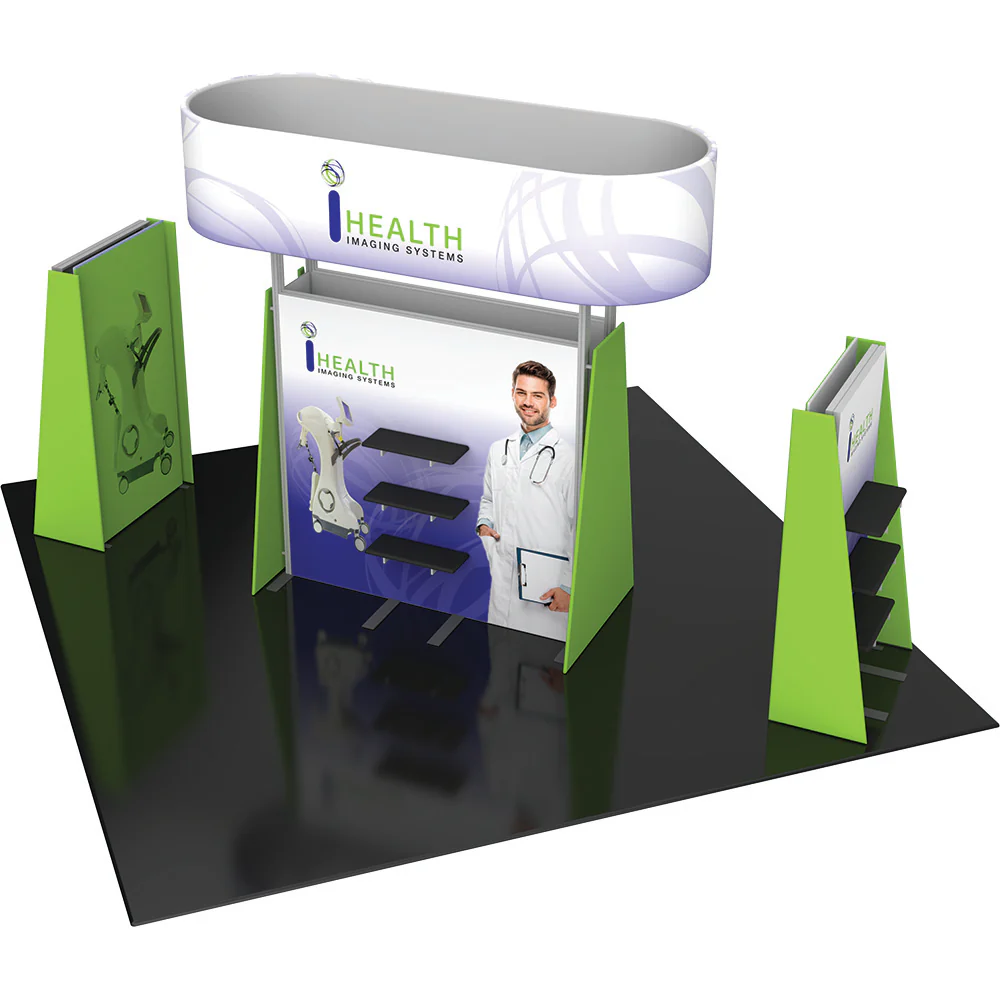
Core Benefits of Portable Display Setups in DFW Events
- Rapid assembly times under 60 minutes to match tight move-in schedules at Dallas Market Hall.
- Compact packing into wheeled cases for easy navigation through venue docks like those at Kay Bailey Hutchison Convention Center.
- Customizable dimensions fitting standard booth spaces from 10x10 up to 20x20 across Omni Dallas Hotel ballrooms.
- Integrated lighting options compatible with standard 120V utility hookups per venue specifications.
- Reusable components that withstand multiple events, lowering costs for recurring shows at Fashion Industry Gallery.
- Versatile configurations supporting hanging signs, counters, and shelving without permanent modifications.
- Weather-resistant materials suitable for indoor-outdoor transitions at Grapevine venues.
Choosing Portable Display Systems for Venue Compatibility
Selecting a portable display begins with matching system specifications to the physical parameters of target venues such as the Kay Bailey Hutchison Convention Center Dallas, which features multiple loading docks designed for efficient freight handling of compact cases. Systems with aluminum extrusion frames and SEG fabric graphics provide durability against the high foot traffic typical in central Dallas exhibit halls, while ensuring compliance with height restrictions often capped at 16 feet for hanging elements. Exhibitors should prioritize UL-listed components to align with safety standards enforced across DFW facilities, including fire-retardant fabrics verified through venue service partner directories.
Further evaluation involves footprint flexibility; for instance, modular kits that expand from inline to island configurations suit the variable booth assignments at Dallas Market Hall, where space optimization is critical during peak trade events. Advance coordination with venue operations, referencing exhibitor guidelines like those for utilities and docks at the convention center, prevents issues with floor loading exceeding 250 pounds per square foot in reinforced areas. This planning phase also considers graphic turnaround times, as high-resolution dye-sublimated prints on stretch fabrics deliver busy branding visible from 50 feet away under standard hall lighting.
- Frame heights adjustable from 8 to 12 feet for low-ceiling hotel ballrooms.
- Weight distribution under 50 lbs per case for single-person transport.
- Compatible with carpeted floors via protective pads to avoid venue damage fees.
Assembly and Configuration Strategies
Assembly protocols for portable displays emphasize sequential steps starting with base frame erection, followed by crossbar connections and graphic panel attachments, achieving stability in minutes for events at the Hyatt Regency Dallas. Tension systems apply even pressure to fabrics, eliminating wrinkles and enhancing professional aesthetics in close-quarter setups like those at the Fashion Industry Gallery. Coordinators recommend pre-event dry runs to familiarize crews with latch mechanisms and locking pins, ensuring adherence to venue move-in windows that often start at 8 AM sharp.
Configuration options extend to hybrid layouts incorporating podiums, backlit counters, and monitor mounts, tailored to the dock-adjacent storage zones at Kay Bailey Hutchison Convention Center Dallas. These setups support dynamic reconfigurations mid-event, such as shifting from perimeter to center-focused displays, without tools or structural alterations. Documentation of assembly sequences, including torque specs for frame joints, maintains consistency across multiple DFW venues from Irving to Grapevine.
- Tool-free snap-fit connectors for 30-second panel swaps.
- Leveling feet adjustable up to 2 inches for uneven convention center floors.
- Integrated cable management channels for clean routing to utility drops.
Logistics and Freight Handling in DFW
Logistics planning for portable displays leverages the strategic dock access at venues like Dallas Market Hall, where advance freight appointments streamline delivery of cases weighing under 100 pounds each. Coordination involves labeling shipments with booth numbers and event dates per exhibitor dock protocols at the Kay Bailey Hutchison Convention Center, minimizing holding area dwell times during peak advance warehouse periods. Exhibitors gain efficiency by consolidating displays into fewer cases, facilitating ground transport via standard box trucks suitable for DFW's interstate corridors.
Post-event dismantle follows reverse assembly, with graphics rolled and frames collapsed for immediate outbound shipping, aligning with strict dock reservation cutoffs. Venue-specific rules, such as those governing dock priority for EAC services, necessitate buffered timelines to avoid overtime charges. This approach ensures portable systems return to storage in pristine condition, ready for redeployment at subsequent events like those at Omni Dallas Hotel.
Power and Utility Integration
Portable displays incorporate low-draw LED strips and monitors drawing 5-15 amps, compatible with the 120/208V three-phase options detailed in the Dallas Convention Center's utilities ordering system. Planners map cable runs from booth service yards to display headers, using armored cords to withstand foot traffic in high-density halls like Dallas Market Hall. Backup battery packs extend runtime during peak load periods when venue transformers reach capacity.
Utility forecasting includes wattage calculators for multi-element setups, ensuring orders stay within per-booth allotments typically starting at 500 watts. Integration with venue-approved power strips prevents circuit overloads, a common issue in hotel convention spaces such as Hyatt Regency Dallas. This meticulous approach sustains interactive features like video loops throughout extended show hours.
- GFCI-protected outlets for safety compliance.
- Daisy-chain limits observed per UL standards.
- Pre-wired harnesses reducing on-site connections.
Branding and Graphic Optimization
Graphics for portable displays demand 150 DPI resolution prints on opaque or backlit fabrics, optimized for the ambient lighting in venues like the Fashion Industry Gallery where natural daylight varies. Design coordination focuses on bleed margins and seam alignments for smooth tensioning, delivering 98% color fidelity under LED hall fixtures. Exhibitors refresh visuals seasonally to maintain relevance across DFW event calendars.
Layered branding layers header banners over mid-level messaging, guiding attendee sightlines in 20x20 spaces at Irving Convention Center. Material choices like antimicrobial fabrics address hygiene concerns in post-event recoveries, while UV resistance preserves vibrancy through repeated setups.
- Pantone-matched colors for brand consistency.
- QR code integration for lead capture.
- Modular panels for targeted messaging swaps.
Scaling for Varied Booth Sizes
Portable systems scale smoothly from 10x10 perimeter booths to 20x20 islands, using connector kits that link multiple frames for events at Gaylord Texan. This modularity accommodates last-minute space upgrades without redesign, fitting the fluid assignments common in Dallas-Fort Worth conventions. Structural engineering supports wind loads up to 5 mph internally, certified for open configurations.
Larger footprints incorporate private meeting pods or product pedestals, enhancing engagement in expansive halls like Kay Bailey Hutchison Convention Center. Scaling maintains assembly efficiency, with full 20x20 builds completing in 45 minutes by two-person teams.
Maintenance and Longevity Practices
Routine maintenance for portable displays includes frame lubrication and fabric inspections post-dismantle, extending service life beyond 100 events for DFW exhibitors. Storage in climate-controlled units prevents warping, with padded covers protecting against dock handling impacts. Annual audits verify compliance with evolving venue fire codes across Omni Dallas Hotel and similar sites.
Predictive upkeep schedules based on usage logs minimize downtime, ensuring displays perform flawlessly at high-stakes trade shows. This disciplined regimen maximizes ROI on investments starting at $3,000 per system.
- Spot-cleaning protocols for fabrics.
- Torque wrench checks on joints.
- Inventory tracking via serialized components.
Frequently Asked Questions on Portable Display Setups
Q: What assembly time should I expect for a standard 10x10 portable display at Dallas venues?
Most systems assemble in 20-30 minutes with two people, aligning with early move-in slots at Kay Bailey Hutchison Convention Center Dallas docks.
Q: Are portable displays suitable for the loading requirements at Dallas Market Hall?
Yes, their compact cases under 75 pounds navigate standard dollies through exhibit hall entrances without special rigging.
Q: How do portable displays handle utility needs in convention hotels like Omni Dallas?
They integrate with 20-amp circuits via short-run cords, ordered per venue utility forms for reliable power distribution.
Q: Can graphics on portable displays be updated between DFW events?
SEG fabrics allow 24-hour swaps, ideal for Back to Back shows at Fashion Industry Gallery or Hyatt Regency Dallas.
Q: What floor space configurations work best with portable setups at Irving Convention Center?
Modular frames adapt to 10x10, 10x20, or L-shapes, fitting assigned spaces with minimal reconfiguration.
Q: Do portable displays comply with safety rules at Kay Bailey Hutchison Convention Center?
Frames and fabrics meet NFPA 701 fire standards, listed in venue service partner guidelines for exhibitor approval.