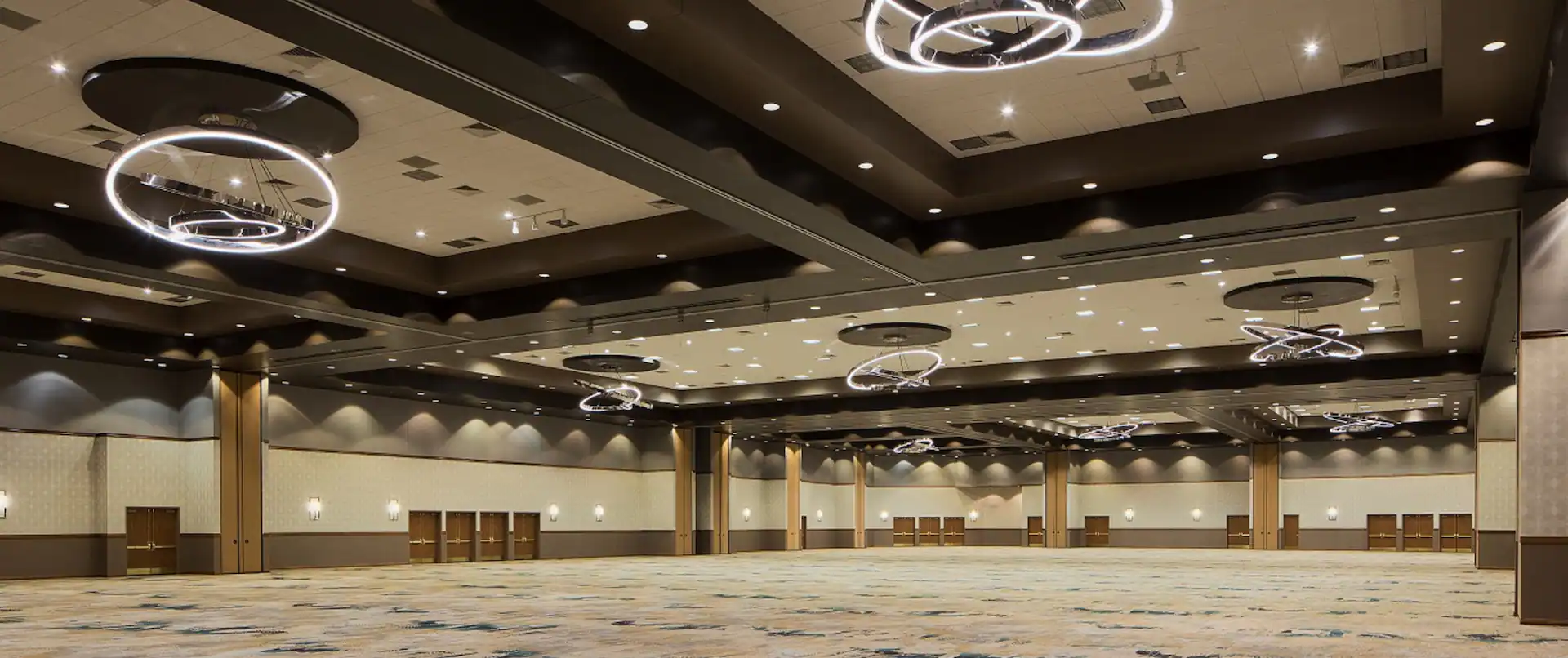
Core Planning Considerations for Events at This Frisco Venue
- Direct connection between all-suite hotel and conference facilities for efficient attendee flow
- Immediate adjacency to Riders Field supporting baseball-related extensions
- Positioning less than one mile from the Star for premium sports integrations
- Emphasis on corporate meetings, hospitality programs, and targeted activations
- Distinct north-metro operational context within the broader DFW market
- Adaptability for focused exhibit elements within conference-hotel scale
- Alignment with Visit Frisco resources for regional event support
Integrated Hotel and Conference Facilities
The Embassy Suites & Frisco Conference Center features a verified physical connection between its all-suite hotel and dedicated conference center. This design reduces logistical complexity for multi-day programs by keeping lodging, sessions, and networking within one contiguous footprint. Planners gain operational flexibility when scheduling activities that move between formal presentations and informal hospitality without external disruptions.
The all-suite accommodations provide individual workspaces and gathering areas that support extended corporate stays common in training or strategy sessions. When incorporating physical brand elements or displays, the integrated layout demands precise mapping of pathways to preserve both functionality and the professional atmosphere expected in Frisco-based events.
Coordination at this scale focuses on synchronizing the distinct rhythms of hotel operations with conference demands. This includes managing material movement and activity transitions across the connected spaces to maintain smooth execution from arrival through departure.
Strategic Positioning in the Frisco Sports and Business Corridor
Visit Frisco documentation places the property adjacent to Riders Field while confirming it lies less than one mile from the Star. This positioning embeds the venue within a district defined by professional sports facilities and ongoing development, creating natural extensions for corporate event programming. Organizations can align agendas with the surrounding infrastructure to enhance engagement without significant additional logistics.
The north-metro setting differentiates Frisco from denser urban clusters in downtown Dallas or airport-oriented venues in Irving. Events here often draw on the prestige associated with major sports brands to create memorable touchpoints that reinforce business messaging. Planners leverage this context when designing experiences that blend education, networking, and regional discovery.
Such district-level integration influences transportation planning, attendee expectations, and potential collaboration opportunities with local organizations. The result is a venue choice that signals intentional alignment with Frisco’s identity as a growing hub for business and entertainment in the Dallas-Fort Worth region.
- Adjacent to Riders Field for immediate access to baseball events
- Less than one mile from the Star for corporate sports alignments
- North-metro district emphasis on targeted professional programs
Exhibit Strategy for Conference-Hotel Environments
The center accommodates focused exhibit and activation components that complement its conference-hotel character rather than competing with large-scale trade show halls. Custom displays and interactive brand environments are scaled to room dimensions and audience profiles typical of corporate gatherings in this district. The approach prioritizes quality interactions within an intimate setting over high-traffic exhibition formats.
Planning for these elements requires early assessment of how physical assets integrate with the connected facility layout and surrounding sports district context. Professional coordination helps align design choices with venue flow, ensuring exhibits enhance rather than interrupt the primary meeting objectives. This measured integration supports stronger connection between brand presence and attendee experience.
In the Frisco north-metro cluster, such programs succeed by respecting the operational boundaries of hospitality-focused spaces. The emphasis remains on strategic placement that maintains clear circulation paths while delivering targeted impact for decision-makers attending events tied to the nearby sports landmarks.
Operational Context Within the North-Metro Cluster
Frisco operates as a distinct cluster within the Dallas-Fort Worth meetings landscape, distinct from the heavy exhibition infrastructure of the Kay Bailey Hutchison Convention Center or the resort scale found at the Gaylord Texan. The center exemplifies the conference-hotel model suited for corporate programs that value proximity to the Star and Riders Field. This context shapes everything from attendee travel patterns to program pacing.
No specific public labor designation has been verified for this property, requiring planners to approach service coordination through general venue guidelines and established DFW practices. The connected facility creates a unique operational tempo compared to standalone convention centers, where material handling and setup occur at larger docks and dedicated loading areas. Attention to these nuances prevents misalignment during execution.
Visit Frisco resources position the venue within the area’s broader meetings ecosystem, offering planners access to supporting information on regional capabilities. This placement helps organizations differentiate Frisco options when comparing against Irving, Arlington, Plano, or Fort Worth alternatives based on event size, audience, and experiential goals.
- Conference-hotel model distinct from dedicated exhibition halls
- Sports-district adjacency shapes program development
- Integration with Visit Frisco meetings infrastructure
Best Practices for Program Development and Execution
Successful events at the center begin with alignment between objectives and the venue’s verified attributes, including its integrated design and sports district location. Planners map session formats, hospitality elements, and any display components to the connected spaces while incorporating the surrounding landmarks for added dimension. This foundational step creates coherence across the entire attendee journey.
Timeline construction accounts for the operational realities of a conference-hotel environment, building appropriate intervals for setup, transitions, and dismantle within the shared footprint. Regular stakeholder alignment helps surface potential conflicts between hotel guest activity and conference programming before they arise. The process emphasizes proactive coordination that respects both the property’s hospitality focus and the energy of the Frisco district.
Longer-term success depends on treating the venue as an active participant in the event narrative rather than simple background. By thoughtfully connecting program content to the proximity of Riders Field and the Star, coordinators develop experiences with greater resonance and measurable value for hosting organizations.
Comparative Analysis with Peer Venues in DFW
The center occupies a specific niche when compared against the verified venue stack across Dallas-Fort Worth. Downtown options like the Kay Bailey Hutchison Convention Center and Dallas Market Hall support significantly larger exhibit footprints and complex multi-day public access, while this Frisco property focuses on contained corporate programs enhanced by sports adjacency. The operational differences guide precise matching of event type to location.
Resort-style venues in Grapevine and select Irving properties emphasize different amenities and scales, lacking the direct integration with professional sports headquarters found less than one mile away at the Star. Arlington and Fort Worth venues similarly serve specialized regional demand. This district-level differentiation enables planners to select environments that amplify rather than dilute strategic goals.
Understanding these comparisons across the DFW corridor, from north-metro Frisco through central Dallas to surrounding suburbs, supports more effective budgeting, design, and logistics decisions. The center consistently emerges as a strong fit for programs where intimacy, convenience, and sports-district context create competitive advantage.
- Smaller-scale integration versus downtown convention volume
- Sports adjacency distinct from airport or resort clusters
- Corporate focus aligned with north-metro development patterns
Long-Term Value Creation Through Strategic Venue Selection
Selecting the center reflects deliberate alignment with Frisco’s established trajectory as a business and sports destination in North Texas. The verified connection between all-suite lodging and conference facilities, combined with proximity to key landmarks, enables programs that deliver both operational efficiency and memorable context. Organizations gain advantages when this choice supports wider objectives in marketing, relationship development, or internal alignment.
The north-metro positioning within the larger DFW venue ecosystem allows for experiences difficult to replicate in other clusters. Planners who fully leverage the district attributes create compounding value through unique activations and enhanced stakeholder perception. This approach transforms standard meetings into strategic platforms with extended impact.
Authoritative coordination resources familiar with the full range of verified DFW venues, including this Frisco conference-hotel, contribute to informed decision-making throughout the planning cycle. Their focus on nuance across districts helps ensure that venue selection strengthens rather than limits desired outcomes.
Frequently Asked Questions About Planning at the Embassy Suites Frisco Conference Center
Q: What defines the Embassy Suites & Frisco Conference Center as a meetings venue?
Visit Frisco identifies it as an all-suite hotel directly connected to the Frisco Conference Center, positioned adjacent to Riders Field and less than one mile from the Star.
Q: How does the Frisco north-metro cluster differ from downtown Dallas venues?
Frisco emphasizes sports-adjacent corporate meetings and activations in a conference-hotel format, while downtown options like the Kay Bailey Hutchison Convention Center support larger-scale exhibitions with different operational demands.
Q: What types of exhibit elements suit this conference-hotel environment?
Targeted custom displays, interactive kiosks, and brand activations scaled for corporate audiences and room dimensions, integrated thoughtfully with the connected hotel and conference layout.
Q: Why consider proximity to Riders Field and the Star in event planning?
The adjacency and short distance enable incorporation of sports-themed experiences, hospitality extensions, and regional context that enhance corporate program impact within the Frisco district.
Q: What planning approach works best for events at this property?
Focus on aligning objectives with the integrated facility design and north-metro sports district strengths, while maintaining precise coordination of timelines, transitions, and exhibit integration.
Q: Where can planners find official details on this Frisco venue?
Visit Frisco provides verified listings and supporting meetings information that outline the property’s configuration and location advantages.